
Health communication
CONTENTS
Potassium-competitive acid blockers (p-cabs): a new era in gastric acid suppression
1. General Introduction
For many years, proton pump inhibitors (PPIs), such as omeprazole and lansoprazole, have been considered the “gold standard” in the treatment of acid-related gastrointestinal disorders. However, PPIs still have pharmacokinetic limitations, including delayed onset of action, short half-life, and interindividual variability in metabolism via CYP2C19. P-CABs have emerged as a potential alternative, with a distinct and more advantageous mechanism of action.
2. Chemical Structure and Physicochemical Properties
Unlike PPIs, which are typically benzimidazole derivatives, drugs in the P-CAB class (such as vonoprazan, tegoprazan, and fexuprazan) have more diverse chemical structures. For example, vonoprazan is a pyrrole derivative.
- Weakly basic nature: P-CABs are weak bases, allowing them to accumulate at high concentrations within the acid-secreting canaliculi of gastric parietal cells.
- Acid stability: An important feature distinguishing P-CABs from PPIs is their stability in acidic environments. P-CABs are not rapidly degraded by gastric acid and therefore do not require enteric coating.
3. Mechanism of Action: P-CABs versus PPIs
Both classes target the final common pathway of acid secretion, namely the H+/K+-ATPase proton pump, but they do so through entirely different mechanisms.
3.1. Proton Pump Inhibitors (PPIs)
Mechanism: PPIs are prodrugs that require activation in an acidic environment to be converted into the active sulfenamide form, which then forms a covalent, irreversible bond with cysteine residues on the proton pump.
Limitation: They inhibit only active pumps and therefore must be taken 30–60 minutes before meals for optimal efficacy.
3.2. Potassium-Competitive Acid Blockers (P-CABs)
Mechanism: P-CABs reversibly compete with potassium ions at the K+-binding site of the H+/K+-ATPase pump. By blocking potassium entry, the pump cannot exchange ions, and gastric acid secretion is halted.
- No activation required: They act immediately and do not require acid-mediated activation.
- Ionic binding: They have a rapid onset of action and can inhibit both active and resting proton pumps because of their ability to diffuse into the cell membrane.
-
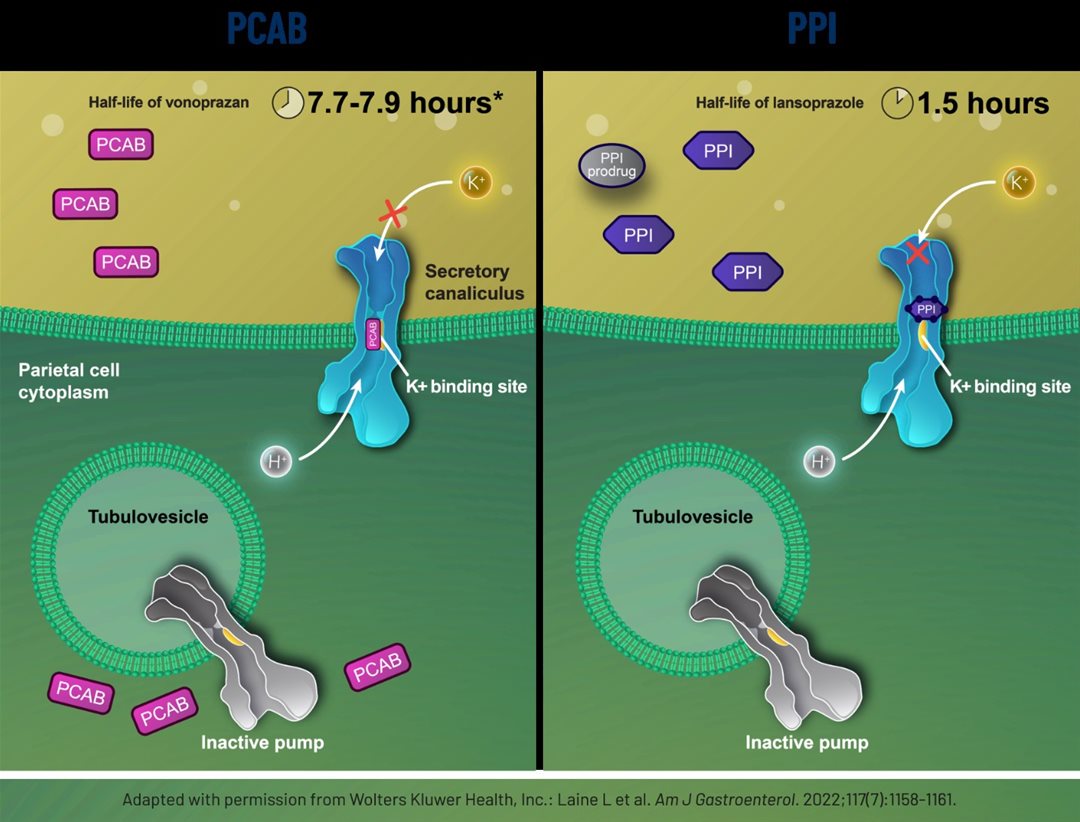
Figure 1. Mechanisms of action of P-CABs and PPIs.
4. Clinical Evaluation: Advantages and Disadvantages
Limitations and safety considerations
- Hypergastrinemia: Because of their potent acid suppression, serum gastrin levels may rise to a greater extent than with PPIs. However, no concerning short-term histologic changes in the gastric mucosa have been reported to date.
- Cost: At present, P-CABs are more expensive than older-generation PPIs.
- Long-term safety data: Although short- and medium-term safety appears comparable to that of PPIs, with similar rates of adverse events, long-term safety data beyond 5 years are still under investigation.
5. Research Stages and Therapeutic Applications
Clinical studies have demonstrated the efficacy of P-CABs in the following indications:
a) Erosive esophagitis (EE)
P-CABs, particularly vonoprazan, have been shown to be non-inferior and even superior to PPIs in mucosal healing, especially in severe esophagitis (Los Angeles grade C/D). Healing occurs more rapidly, with significant improvement as early as the second week of treatment.
b) Non-erosive reflux disease (NERD/ENRD)
P-CABs improve heartburn symptoms and reduce symptom severity more effectively than placebo. However, their superiority over PPIs in this patient group remains less clearly established than in patients with objective mucosal injury, owing to the complex pathophysiology of NERD, which may involve esophageal hypersensitivity.
c) Helicobacter pylori eradication
Because of their potent and sustained acid suppression, P-CABs maintain higher intragastric pH, thereby improving the stability and efficacy of antibiotics such as amoxicillin and clarithromycin. Vonoprazan-based regimens have demonstrated higher H. pylori eradication rates than PPI-based regimens, particularly against clarithromycin-resistant strains.
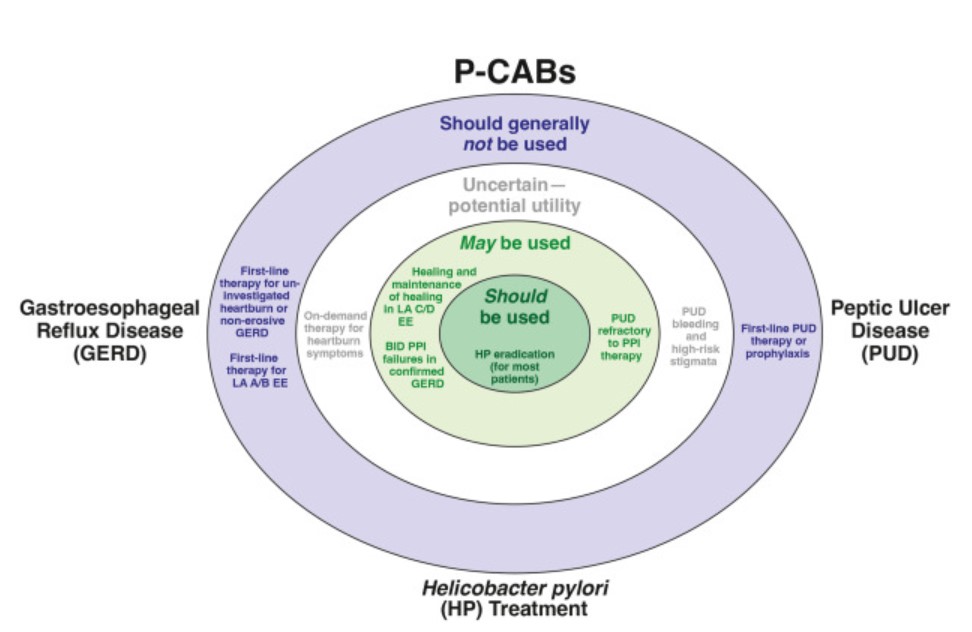
Figure 2. Best-practice advice on the use of P-CABs in foregut disorders, with a focus on GERD, H. pylori treatment, and peptic ulcer disease (PUD). From the outer ring to the center, the figure illustrates clinical scenarios in which P-CABs should not be used, may have potential use pending further data, may be used, and should be used in most patients.
6. Market Status and Potential
Marketed products
- Vonoprazan: approved in Japan since 2015, in several other Asian countries, and more recently in the United States for H. pylori eradication and esophagitis.
- Tegoprazan: approved in South Korea in 2019 and currently expanding into other markets.
Potential role
P-CABs have the potential to become first-line therapy for drug-resistant H. pylori infection and severe erosive esophagitis. Their rapid onset of action also makes on-demand therapy for patients with NERD a promising future application.
7. Conclusion
Potassium-competitive acid blockers (P-CABs) represent a genuine advance in gastrointestinal pharmacology. With their acid-stable structure and unique potassium-competitive mechanism, this class addresses the limitations of PPIs in terms of speed and consistency of acid suppression. Nevertheless, a cautious approach remains necessary, and long-term safety data should continue to be monitored to ensure optimal and safe use in clinical practice.
REFERENCES
- Koo TH, Fass R. A systematic review and meta-analysis of randomized controlled trials: the role of potassium-competitive acid blockers in endoscopy-negative reflux disease. Dig Liver Dis. 2025;57:1752–1760. doi:10.1016/j.dld.2025.04.045
- Wong N, Reddy A, Patel A. Potassium-Competitive Acid Blockers: Present and Potential Utility in the Armamentarium for Acid Peptic Disorders. Gastroenterol Hepatol (N Y). 2022;18(12):693–700.
- Jain SD, Agrawal A, Gupta AK. Potassium-competitive acid blockers (PCABs): A novel era in gastric acid suppression. Int J Pharm Chem Anal. 2025;12(2):105–109.
MSc. Nguyen Yen Ha
MSc. Nguyen Xuan Tu
